Image Credit – Hemapriya
Service dogs begin as foster puppies long before they become lifesaving companions. Their journey starts in caring foster homes where they learn basic manners, socialization skills, and confidence. These early lessons shape their future as reliable service animals who assist people with disabilities, provide emotional support, and improve independence. The foundation built during puppyhood is crucial, as it prepares them for advanced training and the important responsibilities they will handle as adults.
Service dogs begin as foster puppies
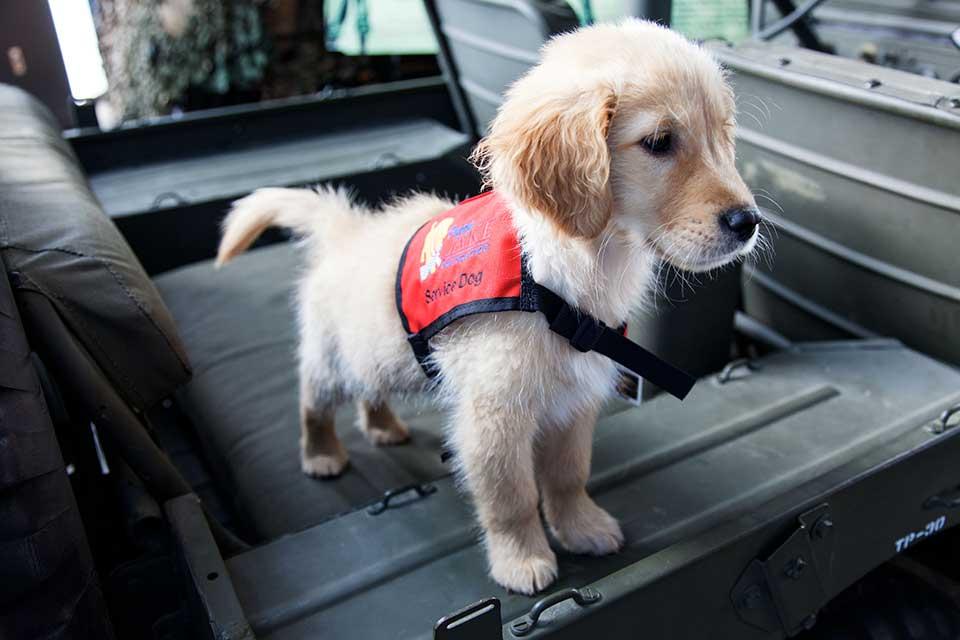
Nancy and Cat both raised puppies for Canine Companions for Independence, an organization that trains dogs to assist handicapped owners.
Hi! I’m Cat. While attending a Ted Turner seminar in 1995, I saw a presentation. by an organization called Canine Companions For Independence. It was so touching to meet two dog recipients who told how their canine companions made their independence possible that I felt deeply I wanted to help.
I contacted CCI in Delaware, Ohio, to apply to be a puppy raiser, and my application was soon approved. A mid-October phone call told me that my puppy was born, and it was a Chesapeake Bay Retriever — coincidentally the breed I have as my pet! This was to be the first Chessie to be tried in the CCI program.
I was introduced to this Chessie puppy, Timber II, on December 1, 1995, and it was love at first sight. This adorable little angel was going to learn more than 50 commands, and assist someone in a wheelchair in less than two years.
Hi, I’m Nancy. I learned about CCI at the Cincinnati (Ohio) Mt. Adams Reindog Parade, Christmas 1994, when CCI presented calendars for all participants. CCI volunteers told us about service dogs, and how they used volunteer puppy raisers. I thought that sounded like something I might like to do.
Casey, our Golden Retriever, died July 1995. Casey had been a wonderful companion, that I felt I could raise a service dog to be such a companion for a handicapped person. This would be my gift in Casey’s memory. That fall I submitted a volunteer puppy raiser application; and found out in November that Marriet, a Golden, had been born. In a winter storm, on January 11, 1996, when baby Marriet was nine weeks, I picked her up.
We all (Cat with Timber and Nancy with Marriet) met when we signed up for a puppy kindergarten class starting in January at Queen City Dog Training Club Inc. We became instant friends, and signed up for the same Basic I, II, and III classes to continue training. QCDTC has been instrumental in our training. It is very important (especially with Service Dogs) to be consistent and patient.
In addition to the normal obedience commands all dogs learn in each level of obedience training, our pups had to learn such additional commands as:
- Shake, which tells puppy to offer his paw in greeting
- Dress, which tells pup to place his head calmly through the collar and stand while you put on his CCI cape
- Say hello, which tells pup to rest his head in your lap
- My lap, which means he should place his front feet across your lap, relaxing on his elbows
- Jump on, which tells pup to jump entirely on top of something
- Go in, which tells pup to crawl under a small space or table and lie down
We take our pups everywhere: they go to restaurants, grocery stores, doctor’s offices, church, library, mall and retirement centers and other places. Timber was permitted to fly in the airplane cabin with me (Cat) , as we flew to Phoenix to attend the conference of the Association of Pet Dog Trainers. Timber even earned the first leg on his AKC-CD.
We have attended three CCI graduations. Seeing the recipients and their new companions working together helps us as puppy raisers with our emotions. We were so moved at the first graduation that we asked how we could become more involved at the next one. We were invited to be “spies” the morning of graduation for the teams’ final working exam. The teams are not
aware that they are being observed and graded by spies like us. Afterwards, we listened to the recipients critique themselves. Then we were introduced and gave our perspective.
We observed the teams’ skills in public, negotiating common obstacles. The individual teams are given a list, much like a scavenger hunt. They are required to use the commands the dogs have been taught. For example, one exercise requires the dog to get money from the owner and give it to a clerk. The dog then must get the change and purchase from the clerk and hand it to his owner.
Other things on the “to-do list” were opening doors, pushing elevator buttons, and sitting politely for strangers. We saw first-hand that the basic commands we teach and the additional commands the dogs learn after they leave us fit into the teams’ everyday life. Observing graduations gave a whole new meaning to our efforts.
It is important that people understand the mentality of a service dog. He has been trained to be under complete control of his handler when wearing the bright yellow CCI cape. At eight weeks old these puppies start getting accustomed to the puppy size cape when they are training. As a guide dog for the blind learns that he is “off duty” when his harness is removed, CCI dogs learn that when the capes are removed, the dogs are allowed to frolic and play. A dog needs time to just be a dog.
Timber and Marriet will be “turned in” to CCI on March 15, 1997. They will go to “college” at the CCI regional training facility. They will be checked thoroughly for hips, eyes, etc. We will have lots of weekends to bring home our “babies,” even a two week summer break in July.
Marriet is in the breeding program so she gets to fly to California after summer break to live with a breeder care taker in a home. CCI finds that Golden/Laborador crosses make the best CCI dogs. She will provide baby Marriets for future CCI teams.
Timber will continue with his college education until late October. Then he will be matched with someone in a wheelchair and go through two or more weeks of team training.
They will graduate mid-November.
We hope the recipients of Marriet and Timber will keep in close touch with us. Timber is a part of my family. It’s hard to imagine that I won’t see that smiling face everyday. It’s hard to imagine that he will love someone else more than me. Along the way we met a dear friend, Susan, who raised a CCI puppy that graduated in July. Susan said she hears from Gene and Frasier (recipient and CCI dog) almost weekly. She and her family went to visit Gene’s family for a vacation. What an inspiration to puppy raisers like us!
It will be very emotional for us to turn in our “babies.” We just keep reminding ourselves how much this means to the recipients; and just how more wonderful, rich and independent we will have helped make someone else’s life.
Service dogs begin as foster puppies, and the love, time, and training invested in their early months play a huge role in their success. Foster families help shape well-behaved, calm, and intelligent dogs who will go on to change lives. Their contribution is priceless, and every trained service dog is proof of the power of early nurturing. If you have thoughts, questions, or experiences with Service dogs begin as foster puppies, let us know in the comments—your voice can inspire others to get involved!
Frequently Asked Questions
Why do service dogs begin as foster puppies?
Service dogs begin as foster puppies so they can receive early socialization and basic training in a home environment. These early experiences help create a strong foundation for advanced service dog training later on.
What do foster families teach when service dogs begin as foster puppies?
Foster families teach essential skills such as house training, obedience, good manners, and exposure to different environments. These lessons help puppies grow into confident and adaptable service dogs.
Can anyone foster a puppy if service dogs begin as foster puppies?
Many organizations allow approved individuals or families to foster service dog puppies. Requirements may include time availability, a safe home, and willingness to follow training guidelines. Fostering is rewarding and directly contributes to creating life-changing service animals.