Image Credit – Hemapriya
The Dogs Nose Knows is a perfect way to describe the incredible sense of smell that dogs possess. A dog’s nose is far more powerful than a human’s, allowing them to detect scents we cannot even imagine. From identifying people and tracking trails to sensing emotions and medical conditions, dogs rely on their noses to understand the world. This remarkable ability makes them invaluable in roles such as search and rescue, medical detection, and everyday companionship.
The Dogs Nose Knows: The Incredible Power Behind Canine Scent Detection
Fastened to a long line clipped to his harness, Slugger surged forward, following an unseen trail. Nose to the ground he worked the field, through tall grasses, past a shrubby copse — and stopped. Something was wrong. Slugger raised his head, sniffed the air. He went a few steps forward, then back; he wandered in a tight circle, sniffing, sniffing. There! He turned right and continued on, his nose working furiously.
A few minutes later, after two more turns, the big akita stopped again, this time to nudge at a wallet on the ground. Tom picked up the leather billfold and Slugger continued on to the marker flag and a successful run in an American Kennel Club tracking test. After today, he would be known as Littlejohn’s Major Leaguer TD for Tracking Dog.
Tracking is a sport; the tracking dog test demonstrates the dog’s ability to follow a trail and find a dropped object. A tracking dog can rest on his laurels or go on to train for Tracking Dog Excellent, a more difficult trial to prove his natural scenting skill.
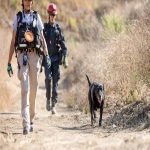
Tracking is also a serious business for working dogs. Canine noses ferret out drugs, bombs, fire accelerants, and contraband; escaped criminals; lost children; and victims of disasters. They work at airports, military installations, police departments, fire departments, immigration points, and in search and rescue teams.
The canine nose is an awesome organ, perhaps a million times more sensitive than the human nose. Fido’s nose can discern the presence of a friend or foe, find a submerged dead body, sniff out a bomb or drug cache, and locate objects bearing the scent of a particular person. L. Wilson Davis, writer, trainer, and one-time AKC tracking consultant, described the incredible depth and breadth of a dog’s sense of smell in his book Go Find! Training Your Dog to Track:
If a If skunk sprays your rose bush, you will be unable to smell the roses. If the assumption that the dog’s sense of smell is simply keener than ours is correct, certainly the odor of skunk would obliterate any other odor even more for him than it does for you. This is not true. Tests have been made with skunk odor and it has been proven that a dog trained in scent work is capable of correctly designating a particular article among a number of articles, all of which have been sprayed by a skunk.
The source of this incredible ability is a nasal cavity rich with blood vessels and nerve endings that connect to a highly developed olfactory center in the brain. This combination allows Fido to gather information from minute particles of scent and to translate it into action.
It hardly seems possible that the leathery patch at the end of a dog’s muzzle could be such an important communication device, yet it is with his nose that Fido becomes acquainted with his surroundings. It is also his nose that makes him useful as a hunter, tracker, police dog, military dog, search and rescue dog — and a fascinating family pet.
Here are some facts about your dogs nose:
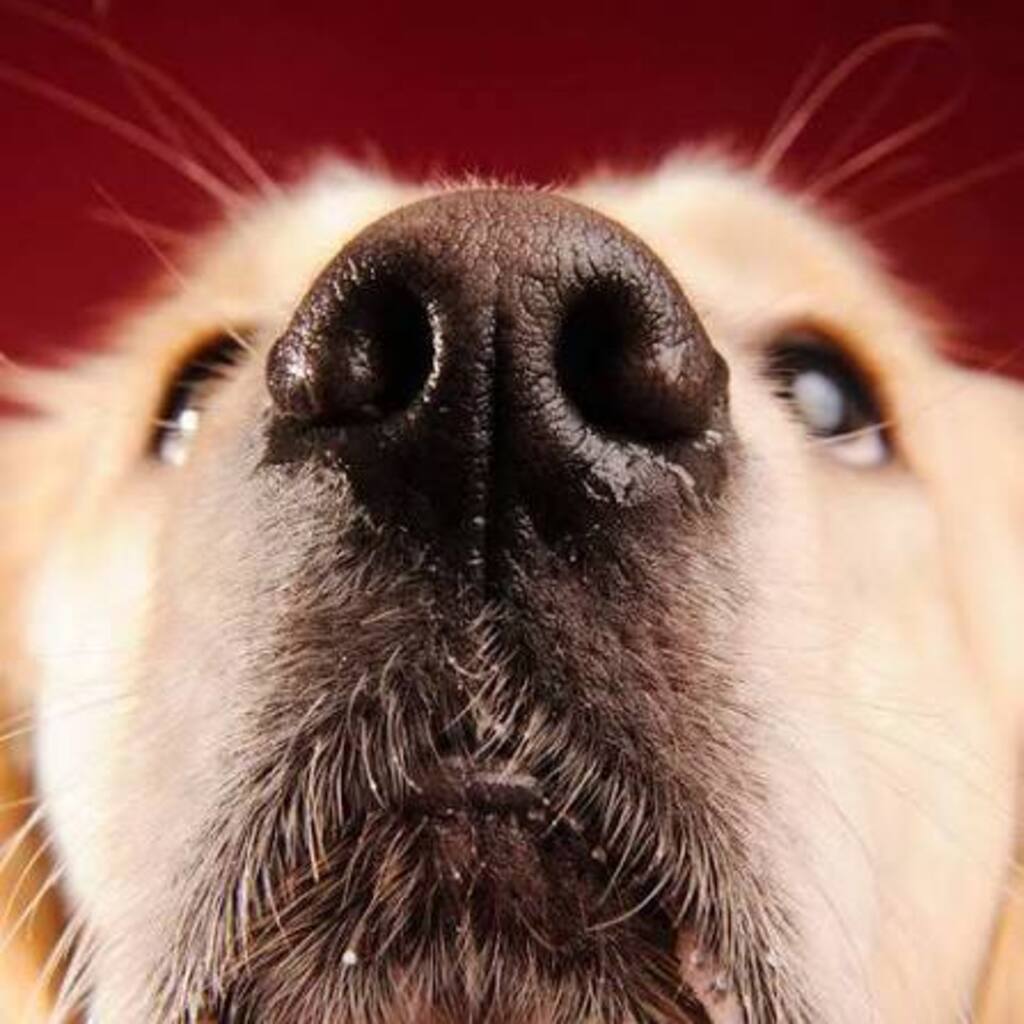
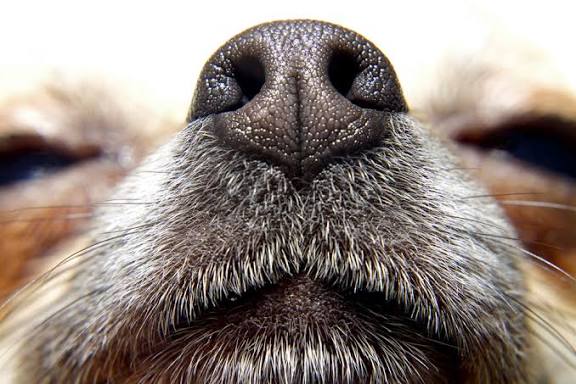
- The canine nose is normally cool and moist, but not wet. It has no sweat glands; the moisture is caused by the mucus lining. The nose is generally dark-colored, but may be pinkish or spotted on some dogs. White dogs often have pale noses, but some breed standards penalize pale or spotted nose leathers.
- If Fido has a runny nose, suspect a foreign body in the nasal passage or illness, allergy, or a tumor. Dogs don’t get colds like people do, but they do get respiratory infections.
- Dogs do sneeze, however, generally from some irritation in the nose. Some dogs sneeze from excitement or nervousness that stimulates the nerves in the nasal passages. Many Akitas make “happy sneezes” after greeting a favorite person or playing.
- Persistent sneezing without discharge indicates a problem such as a polyp or tumor or an inhaled foreign body. A dog with something in a nostril will generally paw at his nose and rub his muzzle against a hard surface. The irritant may cause the nose to run or bleed on the affected side.
- Owners should not try to remove a foreign body from a pet’s nostril. The inside of the nose is easily damaged and the object may be too far back to be easily plucked with tweezers. Some dogs may need to be sedated or anesthetized to have the object removed. Cases of irritation or inflammation should be treated with antibiotics to prevent tissue buildup that can lead to chronic breathing problems.
- Both polyps and tumors can cause breathing difficulties if established in the nose. Polyps are not malignant; tumors can be benign or malignant. Early removal is recommended for these growths.
- A discharge from the nose generally means trouble. Several diseases involve nasal discharge, including distemper, bacterial rhinitis, infected sinuses, and kennel cough (in puppies and toy breeds), so a trip to the veterinary clinic is definitely in order if Slugger’ nose begins to run.
- Some dogs experience loss of pigment on the nose leather or blistering of the nose. Collies and related breeds can get a weepy, crusty dermatitis on the nose if they spend too much time in the sun. Treatment for Collie nose involves keeping the dog out of the sun and treating the ulcerated area with a steroid preparation. Once the nose is healed, it can be blackened with tattoo ink to protect it from sunlight.Other causes of loss of nose color are vitaligo, snow nose, and plastic dish nasal dermatitisVitaligo causes black pigment in the nose and sometimes the lips to fade to brown.Snow nose causes the nose to fade to brown in winter; normal color returns as summer approaches. Snow nose occurs mainly in white-coated breeds; the color change can become permanent in older dogs. It is not associated with disease.Plastic dish dermatitis can occur if the dog eats or drinks out of plastic or rubber bowls. It is triggered by a reaction to an antioxidant found in the dishes.
Nose games are great fun for pet dog owners. A dog that finds his toy, a treat, or his owner by using his nose is a dog that looks forward to interaction with his family and is less likely to be destructive when left alone. Training begins by placing the object in plain sight; then, as the dog understands “find it,” moving the object further away. The goal is to be able to hide it completely between sofa cushions, inside a shoe in the closet, under an upholstered chair, etc. and send the dog to look. A variation on the game involves placing a dog biscuit under one of three or four upturned flower pots or plastic cups, then telling the dog to “find it.”
The Dogs Nose Knows truly highlights the extraordinary superpower of a dog’s sense of smell. This natural ability helps dogs navigate their surroundings, protect humans, and form deep emotional connections. Understanding how a dog’s nose works allows owners to better appreciate and support their pet’s instincts. Whether for work or play, a dog’s nose is central to its life. Let us know in the comments how your dog uses its sense of smell or any amazing scent-related behavior you’ve noticed.
Frequently Asked Questions
What does “The Dogs Nose Knows” mean for dogs?
It means dogs rely heavily on their powerful sense of smell to explore, recognize, and understand their environment.
How strong is a dog’s sense of smell compared to humans?
A dog’s sense of smell is thousands of times stronger than a human’s, allowing them to detect tiny scent particles.
Why is a dog’s nose so important?
A dog’s nose helps with tracking, communication, safety, emotional bonding, and specialized tasks like search and rescue.