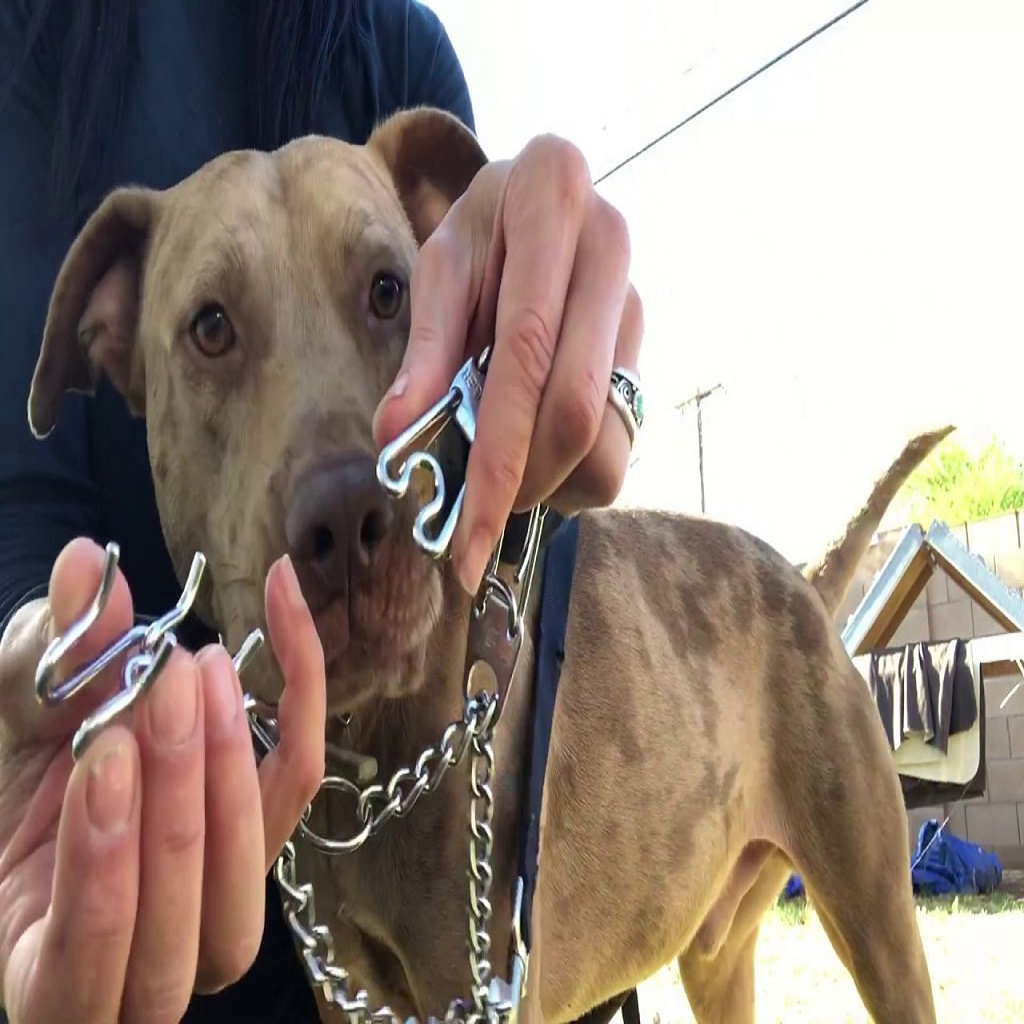
Image Credit – Hemapriya
A prong collar is one of the most talked-about training tools in the dog world. Some dog owners swear by it, while others are unsure if it’s the right choice. The truth is, when used correctly and fitted properly, a prong collar can be a safe and effective way to communicate with strong or stubborn dogs during training. It’s not about punishment — it’s about clear guidance and control. Before deciding if a prong collar is right for your dog, it’s important to understand how it works and how to use it responsibly.
The Prong Collar
In the old days, dogs were trained on chain slip-collars known commonly as chokers. Today, the chain collar has been joined by a nylon version, a snap-on slip collar, a humane choker, a Halti head collar, and a no-pull halter. Each training device has its followers, as does the plain buckle collar.
Turmoil surrounds another training device that is gaining in popularity and is described as both cruel and humane. Known as the prong or pinch collar, this interlocking steel link collar looks like a medieval torture device, but it is actually a gentle tool for training many dogs with little or no tugging, jerking, or pulling. However, it is not suitable for all dogs, and herein lies the problem.
Slip collars should fit just below the dog’s ears for good results. They work by tightening and loosening a noose around the dog’s neck. A harsh jerk with a slip collar can damage a dog’s trachea. Furthermore slip collars may not be effective on dogs with thick necks or thick coats, particularly if they slide out of position.
The humane choker looks like a prong collar made of chain instead of interlocking links. It has two loops, one of which fits around the dog’s neck. The second loop is attached to the first and is used to tighten the chain when necessary to guide the dog or correct his behavior. This collar is becoming more popular among trainers who prefer to teach the dog through motivation rather than correction.
The head collar and the no-pull halter work by pressuring the dog’s head in the former case and his underarms in the latter case. Although they are hailed by some as the only humane training devices effective on every dog, they do not live up to this advance billing. The head collar can injure a thin-necked dog and is not suitable for nervous, fearful, or jumpy dogs, and the no-pull halter may be counterproductive on thick-skinned, hard-headed dogs.
Of all these training devices, the prong collar is the most misunderstood. Those trainers who put one on every dog are as misguided as those who refuse to use them. The prong is not suitable for aggressive dogs and is too harsh for extremely shy or fearful dogs. The prong is not for young puppies, although it can be used under the guidance of an experienced trainer for older puppies.
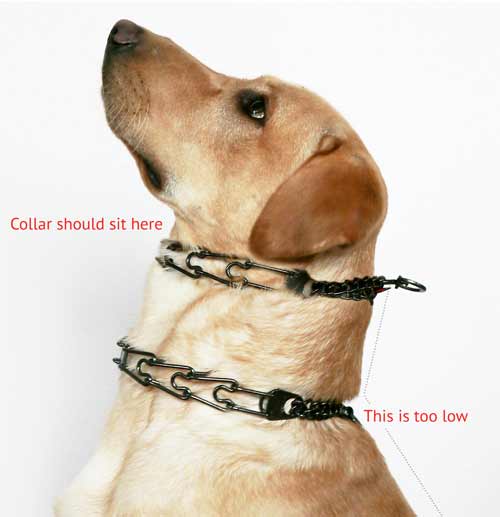
The prong collar is made of interlocking links, each with two blunt prongs that pinch the dog’s skin when the collar is tightened. It should fit snugly just below the dog’s ears. Unlike the chain slip collar, it puts even pressure around the neck by pinching the skin in a band about a half inch wide. No pressure is put directly on the trachea with the pinch collar.
Training the average dog
Puppies can learn their basic manners without resorting to a training collar of any type. Sit, down, stay, and stand can be taught without a leash, so a buckle collar (or no collar) is sufficient for this type of training. To teach a puppy to walk on a leash, attach a cord to the buckle collar and coax him to walk along with you. If he pulls, encourage him by turning in another direction, calling “Rover, let’s go!” in a cheerful tone, and clapping hands to encourage him to follow. A small puppy should never be yanked around.
You can teach a mild-mannered older puppy to walk nicely on a leash by using a rope or long leash and following the same routine.
Problems arise when the older puppy has been allowed to have his own way, is thoroughly distracted by his surroundings, or is handled in class by someone who is not physically strong enough to work a large, boisterous dog. A pinch collar may be preferred in these situations, although some trainers have great success with the humane choker or the nylon snap-on slip collar. The prong collar can be used to get these dogs under control, to remind them to walk nicely, to pay attention to the handler, and to quit pulling. Many dogs benefit from a week or two of training on the prong and then do fine on another collar. Some dogs are bullheaded and need a prong for a longer amount of time.
Some trainers use the prong collar for a couple of practice sessions, then leave it on the dog’s neck along with the buckle or slip collar so they can switch the leash back and forth if necessary. Some experienced trainers do use the prong on puppies or shy dogs, but they pad the neck under the collar by slipping a child’s tank top around the pup’s neck. Some turn the collar “inside out” so the smooth side of the links lie against the dog’s neck and the collar constricts but does not pinch when tightened.
Although some trainers routinely use the prong collar on large or dominant breeds, the choice of collars should be based on the individual dog and owner, not the breed. The worst reason for choosing a prong collar is for its formidable appearance; it is a tool for training, not a symbol of owner or dog machismo.
When choosing an obedience school or club, pet owners should look for those that offer instruction geared to the individual dog and owner and pass by the ones that insist that one collar and one technique fits all.
At the end of the day, a prong collar is simply a tool — and like any tool, its effectiveness depends on how it’s used. With proper fit, correct technique, and positive reinforcement, a prong collar can support better leash manners and safer walks. Always prioritize your dog’s comfort and well-being, and consider working with a professional trainer if you’re unsure. Have you tried a prong collar with your dog? Let us know in the comments!
Frequently Asked Questions
Is a prong collar cruel for dogs?
A prong collar is not cruel when used properly. It’s designed to distribute pressure evenly around the dog’s neck rather than focusing on one spot. However, improper use or poor fitting can cause discomfort. Proper training and guidance are essential.
When should you use a prong collar?
A prong collar is often used for dogs that pull excessively on the leash or are difficult to control during walks. It should typically be introduced under the guidance of a professional trainer to ensure it’s used correctly and safely.
Can a prong collar stop leash pulling?
Yes, a prong collar can help reduce leash pulling by providing clear, consistent feedback. When combined with positive reinforcement and consistent training, many owners see improvement in their dog’s leash behavior.